Dr. Chris Brauer

If AI is in its teenage years,
we are the parents.

Dr. Chris Brauer — Chief AI Officer at FSP, Director of Innovation at Goldsmiths, University of London. Two decades translating academic-grade AI research into boardroom decisions, at the table with the people setting AI policy, not just commenting on it.
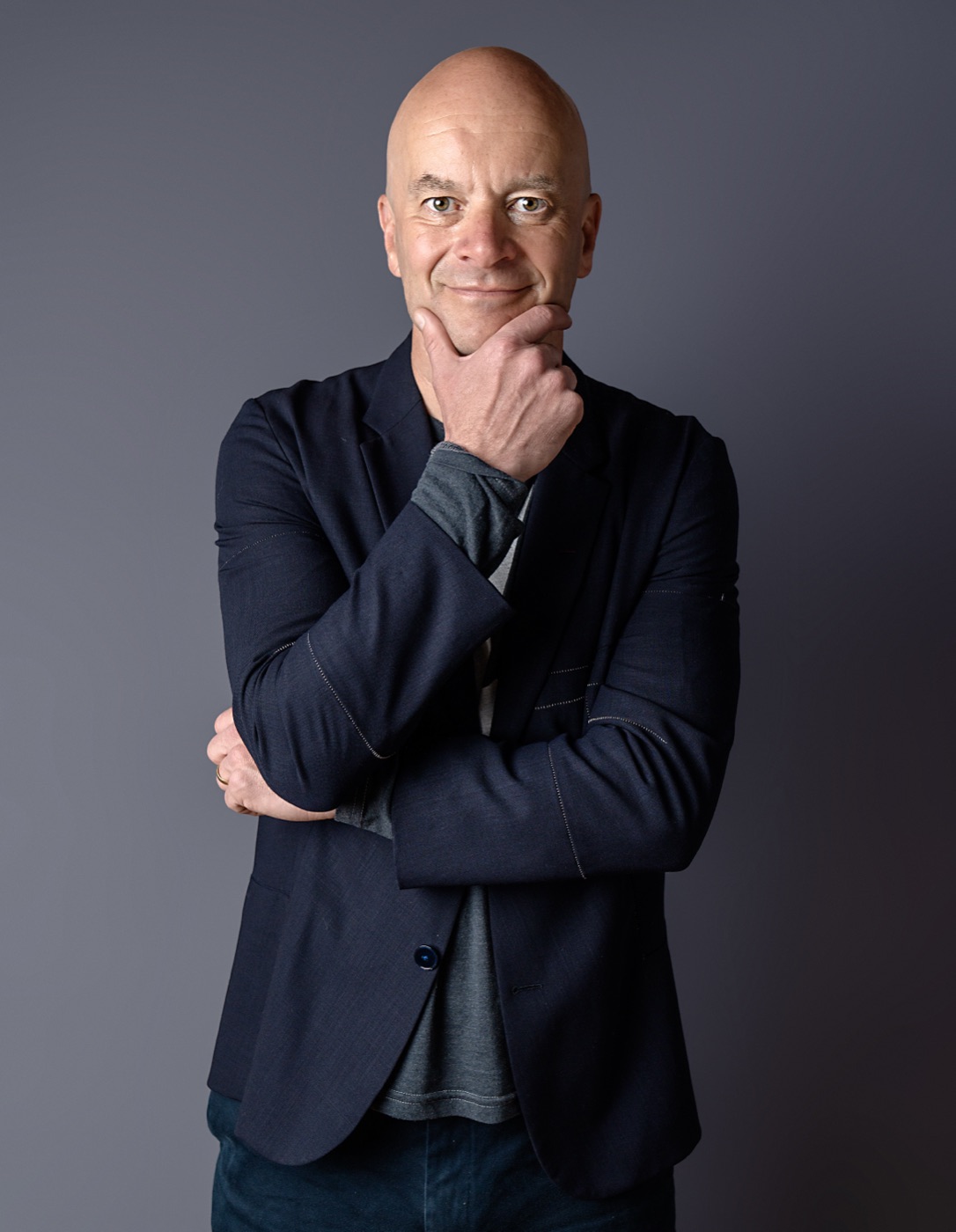
Dr. Chris Brauer London, 2023
Chief AI Officer · FSP / Director of Innovation · Goldsmiths, University of London / Chairman of Innovation · Edelman / Fellow · Royal Society of Arts
Previously — Global Strategy Officer · World Economic Forum / Co-founder · Symmetry, acquired by FSP 2025
Frameworks

An evolving field guide to intelligence, institutions, and how the two learn to work together

Standing ideas, not one-off posts — the frameworks below are the current shape of an ongoing line of thinking, developed in the boardroom and the classroom at once.

Framework 01

AI's Teenage Years

Opening thread from the FSP AI Summit, BAFTA, 195 Piccadilly — an invite-only room of 200 senior leaders. As Chief AI Officer at FSP, Chris curated the session — part monologue, part spotlight conversations — moving from creative AI with Sir William Sargent, to national security with Gemma Ungoed-Thomas, to energy systems with Lord John Browne.

Read the full framework

AI has lived through the equivalent of 13 years of adolescence in just 36 months.

Brilliant one moment. Baffling the next.

Half-magic, half-monster.

Three domains. One shared responsibility: if AI is in its teenage years, then we are the parents. We shape the environment. We set the boundaries. We encode the values. Not through control, but by guiding how it develops — and how it learns to act. The question isn't whether AI will grow up. It's what kind of actor it becomes when it does.


Framework 02

The Capability Gap

Delivered as the flagship keynote for Coca-Cola HBC's Mind Gym, at their Digital Hub in Cairo — a diagnosis of why AI adoption stalls even inside capable organisations: the technology moves on an S-curve, but most institutions absorb it on a straight line, and the distance between the two is where value quietly gets lost.

Read the full framework

Speed gets the headlines.

Direction gets the results.

Leadership remains irreducibly human. The density of intelligence around it will not.

AI Operations

Building the operating system for AI

Today's copilots are training wheels for tomorrow's agentic systems — coordination of people, systems, and agents, not just individual productivity. Technical debt is no longer IT's problem alone: poor integration creates workflow sprawl, hidden dependencies, and institutional knowledge locked inside individual prompts.

AI Workforce

Guarding against Cognitive Surrender

Air France Flight 447, 2009: three experienced pilots, a system failure lasting four minutes and twenty-three seconds. The autopilot had flown for so long that the human capability to intervene had quietly degraded. The task for leaders is designing for the expansion of human judgment, not its erosion.

AI Leadership

AI fluency is leadership table stakes

Sector expertise, tenure, and institutional authority are being joined by new signals — AI fluency, orchestration thinking, comfort with ambiguity. This is not a generational shift. It is a legitimacy shift.

Closing the gap isn't one fix — it's calibration on three fronts at once: compass (direction over speed), culture (judgment over adoption), and mindset (continuous reinvention over compliance). Organisations that only chase the technology will always be behind it; the ones that close the gap are the ones that rebuild how they decide, not just what they use.


Framework 03

Agents of Change

A Microsoft-commissioned research collaboration, conducted December 2024 to March 2025 by a team spanning Goldsmiths and Symmetry — Research Director Dr Jennifer Barth, and a core group of economists, psychologists, data and social scientists. Published 5 March 2025 and launched live on stage with Microsoft UK CEO Darren Hardman, it was the first UK research to address the specific opportunities and risks of agentic AI's rise — early enough in agentic AI's emergence that the team had to build a structured foresight methodology from scratch, to help leaders anticipate a wave of disruption to operations, workforces, and business models that had barely begun.

Read the full framework
Scale

Nearly 3,000 UK voices

1,480 senior decision-makers and 1,440 employees surveyed, alongside 25,000 qualitative data signals and 11 depth interviews with customers and subject matter experts.

Tension

The ambition-action gap

72% of leaders expect AI agents fully integrated within two years — yet just 20% of organisations have actually been able to advance and scale AI to date.

Pressure

A workforce stretched thin

52% of UK workers say they're doing more work than is possible for one person; 36% of leaders admit staff are covering for at least two people's roles.

You can build a very rich agentic world, defined by a tapestry of AI agents, which can act on our behalf across our work and life, across teams, business processes, as well as organisations.

— Satya Nadella, CEO, Microsoft

The report didn't stay in the room. Hardman cited it directly in his own AI Tour keynote as evidence for a half-a-trillion-pound UK opportunity, and Microsoft's WorkLab has since built an ongoing series of case studies around the Agents of Change concept — a rare case of academic research setting the agenda for a global technology company's own narrative, rather than following it.


Framework 04In progress

Token Economics

Moving organisations from experimentation to sustainable value creation.

Framework 05In progress

Governance in Increasingly Autonomous Systems

Agentic density, technical debt, and operational control as capability scales.

About

The short version, and the long one

Dr Chris Brauer is Chief AI Officer at FSP, Director of Innovation at Goldsmiths, University of London, Chairman of Innovation at Edelman, and a Fellow of the Royal Society of Arts. Across twenty-eight years, he has moved between academic research and corporate leadership without ever fully choosing one over the other — building an AI venture from founding to acquisition, advising governments through the World Economic Forum, and leading research collaborations with Microsoft that have shaped UK AI policy. His work sits at the rare intersection of academic-grade evidence and boardroom accountability: not commentary on AI transformation, but direct responsibility for delivering it.

Read the long version

Dr Chris Brauer is Chief AI Officer at FSP, where he leads enterprise AI strategy, responsible AI governance, and market positioning for one of the world's most trusted advisory and technology practices. He is also Director of Innovation at Goldsmiths, University of London, Chairman of Innovation at Edelman, and a Fellow of the Royal Society of Arts.

Across twenty-eight years, Chris has built a genuinely rare combination of credentials: academic-grade research discipline paired with direct, accountable corporate leadership. He has spent as much time in PhD seminar rooms and peer-reviewed methodology as in boardrooms — and built his career refusing to choose between the two.

That combination has been tested at real scale. As Chairman of Innovation at Edelman and one of twenty-five Global Strategy Officers at the World Economic Forum, he has advised governments and boards on AI and energy-transition policy, co-authoring working papers that went on to influence EU policy. His research partnership with Microsoft has spanned successive UK CEOs — from Cindy Rose to Clare Barclay — producing some of the most cited AI-adoption research in the UK market, launched on stage alongside Microsoft's global CEO, Satya Nadella, and cited in Microsoft's own published research as the work of "independent researchers from Goldsmiths."

Chris co-founded Symmetry, an AI research and engineering venture built around a differentiated blend of strategic diagnostics and rapid delivery. Symmetry was acquired by FSP in 2025, and Chris moved into his current Chief AI Officer role — proof not just of AI thought leadership, but of building, operating, and successfully exiting a company others chose to acquire.

His current flagship research, "Agents of Change," developed with Microsoft, was the first UK study to address the specific opportunities and risks of agentic AI — built early enough in the technology's emergence that the methodology itself had to be invented alongside the findings. It is a pattern that has defined his career: reaching the frontier early enough to help shape how organisations respond, rather than reporting on what already happened.

Chris's research and advisory portfolio spans energy, logistics, luxury, aviation, cybersecurity, and technology — evidence of a mind that operates across sector boundaries rather than within one, and of real fluency in the complex, regulated, high-stakes environments where AI governance actually matters most. Responsible AI is not a slide in his deck; it is the throughline of his published research, from a UK-wide cybersecurity resilience model built with Microsoft to his current work on governance frameworks for increasingly autonomous systems.

His current thinking centres on what he calls AI's "adolescence": the idea that the technology is growing up at extraordinary speed, and that leadership's task is not to control it, but to responsibly parent what it becomes.

Download bio & photo pack →

The long view

Two decades inside the field, not two years riding the wave

Not a futurist — someone who has spent the better part of three decades close enough to each wave to feel its edges before it broke. The route crosses disciplines (computing, journalism, management consulting, psychology, sociology, design) and sectors from energy and defence to retail, media, and financial services, across public, private, and civil society alike.

What holds it together isn't one expertise. It's a constant: theory tested against practice, adjusted, and tested again.

Chapter 01 — Dot-Com, 1998–2001

Leadership & Storytelling

Read more

First leadership roles, both of them. Online Editor at the Press Association, building Ananova — an AI personality layered over one of the country's most valuable knowledge graphs. Head of Content at Virtue TV, streaming The Doors and Paul McCartney to whoever's connection could take it. Neither idea was fully formed, and both left questions open that took twenty years to properly answer: what a machine owes the people it represents, and how far a story travels before the medium reshapes it.

Ananova Virtue TV
Chapter 02 — Like an MBA, 2002–2005

Operating Models & Process Reengineering

Read more

Principal Consultant at PwC — a practical MBA taught in the field: R&D, business models, talent, risk, the tension between IT and the business, learned at high rates and higher expectations while criss-crossing the world fixing other people's operating problems. The dot-com's halcyon promises were over; only the top and bottom lines mattered now, and systems integration was the discipline of the decade as legacy infrastructure dragged itself online — Oracle already making the case that data itself was the asset. A first lesson in how invention survives contact with an institution.

BC Ferries Blockbuster Oracle
Chapter 03 — The Learning Years, 2005–2010

Continuous Learning & Dr Chris

Read more

Taught a systems integration course at Camosun College, Vancouver Island, in 2004 — a PwC posting — and caught the academic bug there, not in the firm. The PhD followed, but the peer group is what actually changed things: learning to stop trying to be the smartest person in the room, in a cohort that included the person I'd go on to build a family with, met in the first seminar, both January 2005 joiners. Under mentors who still shape how I think, growth mindset stopped being a phrase and became a practice: workforce transformation needs continuous learning more than upskilling, and behaviour change more than either. This is also where "Dr Chris" started — a credential built to bridge academic rigour and industry application, not just decorate a name.

Les Back Robert Zimmer Mark d'Inverno Mark Bishop Richard Nobel Natalie Fenton CAST lab
Chapter 04 — Innovation in the Wild, 2010–2015

Fieldwork & Responsible AI

Read more

Post-PhD, critical thinking applied to everything is its own strange isolation — theory sealed off from the world it explains. This era was the antidote: testing that thinking on the frontier, not just in corporate settings, with Richard Stallman, Pierre Lévy, Julian Assange, and Donna Haraway, watching cypherpunk theory, feminist technoscience, and singularity thinking actually manifest — in crypto, automation, peer-to-peer, open source. A wall in a Thames-side crypto mine read "if all else fails, use magic." Long stretches at IBM Watson's old South Bank HQ, and building Project Virtual Assistant, landed on the idea that defined everything after: responsible AI means being responsible with the technology, not just responsible to the people it touches. Also where the energy and sustainability interest properly took hold — impact widening from corporate performance to socioeconomic and planetary.

Head of Online Journalism, City CNBC: called Bitcoin's rise, 2013 Origin of the Edelman role "Generation Cloud" (Rackspace)
Chapter 05 — Augmentation & Impact, 2015–2020

Structured Foresight & Trust

Read more

Chairman of Innovation at Edelman, and a five-year run of trusted relationships with some of the world's biggest and fastest-growing companies — structured foresight and empirical evidence standing in for opinion when it came to AI strategy. The deepest of them started on a whiteboard in Microsoft UK CEO Cindy Rose's office, sketching the S-curve behind Satya Nadella's freshly-arrived intent to rejuvenate the company's innovation potential. Microsoft's market cap went from $390bn in 2015 to $1.62tn in 2020; the research partnership that followed helped chart some of that arc. Two reports, "Maximising the AI Opportunity" (2018) and "Accelerating Competitive Advantage with AI" (2019), launched at Microsoft Decoded London — delivered the key findings on stage alongside Cindy Rose, and in 2018 watched people physically tear open the boxes scattered around the ExCeL Centre to get a copy. Quant and qual research on AI's earliest real use cases included a close look at OpenAI's GPT-1, months before Microsoft made its first investment in the company. One thread ran through all of it: augmentation — what AI tools actually do to capability, productivity, creativity, and job satisfaction, not what they promise to do.

Edelman — Chairman of Innovation Microsoft: $390bn → $1.62tn (2015–2020) Energy Savings Trust — Smart Lives WEF — Global Strategy Officer Make Work Human (Automation Anywhere) Futura Corp (IPsoft) Shell — Drives You, 15,000 drivers
Chapter 06 — Founder & Generative, 2020–2025

Founder & Generative

Read more

Three more years of high-stakes Microsoft work, starting with "Creating a Blueprint for UK Competitiveness" — born out of the pandemic, launched on a Teams call with Satya Nadella himself, presenting blueprints for AI-driven recovery in the sectors hit hardest: aviation, hospitality, professional services. The wind stayed at our back working with Clare Barclay, Cindy Rose's successor as UK CEO — "Mission Critical" took the same rigour into cybersecurity, "Partnering on the Road to Net Zero" into sustainability, expanding into where AI actually crosses with both. Appointed one of 25 Global Strategy Officers at the World Economic Forum, the resident AI voice in an energy-transition working group of specialists — two working papers that went on to influence EU policy. Edelman's seat became permanent, plus a transitionary global advisory role on AI innovation, and the introductions that followed — DP World, Samsung, Chanel — turned into advisory relationships and stages of their own.

Then the founding itself: Symmetry, built with Jennifer Barth and Duncan Anderson as Chief Cognitive Officer — the same Duncan who ran those early IBM Watson experiments back in Chapter 04, by then former CTO of IBM Europe. A contract research service, a Strategic AI Roadmapping offer (STAIRS), and Sandbox as a Service for rapid prototyping — specialising early in agents, working with CrewAI before it was well known and later Microsoft Foundry, building a "factory" that wrapped data pipelines, security, and responsible-AI guardrails around whatever a client actually needed built. FSP saw it at their King's Cross all-hands in early 2025, made an offer that summer, and closed the acquisition that September — moving over to become Chief AI Officer at FSP, tasked with both revenue growth and AI market credibility, while Jennifer Barth became Chief Research Officer, building the research capability from the inside.

Acacium Group CrewAI Microsoft Foundry FSP acquisition — Sept 2025 Jennifer Barth — Chief Research Officer, FSP
Chapter 07 — 2026–2030

Twenty-eight years in, and the newest chapter — what agentic AI asks of leadership — is the one just getting started. The rest of this site is where it's being written.


Selected affiliations
Edelman
Selected clients & advisory
Home Office HFW
Media

Watch, read, and see it live

As featured in
BBC News Financial Times CNN Wall Street Journal BBC Click Globo CBC CCTV

and 400+ media outlets worldwide

Watch
BBC Click
"Addicted to Gaming?" — featuring Chris's Lego Play Day research, using AI to track outcomes associated with play in the Lego workforce. Watch the segment →
FT Business
"What Can We Learn From Sport Science?" — extending the talent-optimisation logic from sport into everyday organisational decision-making. Watch on YouTube →
Read
Microsoft
"AI Divide Across UK Organisations Risks Growth for Many" — Microsoft's own press coverage of the Agents of Change findings. Read on Microsoft News →
WEF
"Electricity+: Electricity as the Backbone of an Integrated Energy System" — World Economic Forum white paper, January 2023, from the energy-transition working group Chris contributed to. Read the white paper →

[More videos and links to follow.] add: further video/link content

Selected speaking

On stage, not just online

11 Jun 2026
Coca-Cola HBC — Mind Gym, Coca-Cola Digital Hub, Cairo
Details
Keynoted "The Capability Gap" — why AI innovation follows an S-curve while most organisations' adoption stays linear, widening the distance between what the technology can do and what the institution can absorb. Structured around three pillars: AI Operations (building the operating system for AI), AI Workforce (guarding against "cognitive surrender" — illustrated by Air France Flight 447, where automation had flown so long that the pilots' capability to intervene had quietly degraded), and AI Leadership (arguing AI fluency is no longer optional: "not a generational shift, a legitimacy shift").
"Speed gets the headlines. Direction gets the results."
23 Apr 2026
FSP AI Summit — BAFTA, 195 Piccadilly. Curated and opened proceedings for 200 senior leaders.
Details
Opening keynote: ranged from frontier AI research and market disruption to healthcare, sport science, and autonomous transport, before returning to its anchor — AI as a teenager, and us as the parents responsible for how it grows up. Panel: the first hosted by Dr Chris Brauer, with Sir William Sargent (Co-Creativity with AI), Gemma Ungoed-Thomas (Cyber, Trust, and Reality), and Lord John Browne (AI, Energy and System Transformation) — sharing perspectives on leadership, innovation, and risk as organisations navigate AI accelerating both opportunity and exposure.
"What are we building into the next age?"
5 Mar 2025
Microsoft AI Tour — London leg, ExCeL London. On stage with Microsoft UK CEO Darren Hardman.
Details
One stop on Microsoft's global AI Tour, bringing its AI vision directly to 4,500+ customers, partners, analysts, and journalists. The London leg's centrepiece was the live launch of "Agents of Change" — full findings in Framework 03.
23 Jan 2025
Samsung Galaxy Unpacked 2025 — Galaxy Tech Forum: "True AI Companion: Impact on Life and What's Next," San Jose, California
Details
Panel: with Jay Kim (EVP & Head of Customer Experience Office, Mobile eXperience Business, Samsung Electronics), Sameer Samat (President of Android Ecosystem, Google), and Christopher Patrick (SVP & GM, Mobile Handsets, Qualcomm Technologies). Moderator: Bob O'Donnell (President & Founder, TECHnalysis Research). Presented continuing findings from the global Symmetry study on mobile AI adoption and quality of life, and identified three adoption barriers: doubt in AI's meaningful benefits (56%), lack of confidence using it fully (85%), and privacy concerns (90%).
"Frequent consumer use of mobile AI globally has nearly doubled in just six months, jumping from 16% in July to 27% in January."
28 Nov 2024
At Every Turn — McLaren Technology Centre, Woking, invited by Beat Simon (Global Chief Operating Officer, DP World) and Andrea Stella (Team Principal, McLaren F1 Team)
Details
Delivered in the round, on a 360-degree theatre stage — a keynote tracing four industrial revolutions, from steam to electrification to computing, to argue AI marks the start of something further: an Intelligence Age. Framed as "a coming-of-age story of one of the most remarkable innovations in the history of civilisation," then grounded in a concrete case: an NHS deep-learning deployment for short-life blood products that cut expired platelet waste by 54% and eliminated ad-hoc emergency transport entirely. Fellow speakers included Zak Brown (CEO, McLaren Racing), Mika Häkkinen, Sir John Sawers (former Chief, MI6), Dr Rebecca Harding, and Mary Portas OBE.
"It's a time when collaborations between humans and technology will reshape the world in ways we can only begin to imagine."
20 Nov 2024
Juniper Networks Executive Circle: AI Summit — MGM Grand, Las Vegas. Closing keynote, following Guy Kawasaki, Kevin O'Leary, and Scott Galloway.
Details
Delivered "Unlocking Superpowers in the Age of Intelligence" to 40–50 C-level executives, mostly CIOs, across industries. Structured in three parts — the Age of Intelligence, dispatches from the front lines, and unlocking superpowers — grounded throughout in the discipline of resisting what Chimamanda Ngozi Adichie calls "the danger of a single story."
"In rewiring our organisations we must overlay the flow of AI to the flows of knowledge, goods, data, and finances."
22 Oct 2024
Chanel — Paris. A return engagement, this time for the organisation's senior legal leadership.
26 Jun 2024
Chanel — Paris. A closed-door session on the impact of AI, including a live demonstration of agentic AI at work on a real Chanel challenge — notably early hands-on engagement with what became one of the industry's defining trends.
11 Jun 2024
Samsung "Salon d'AI" — Paris, part of the Galaxy Unpacked 2024 AI conversation
Details
Panel: The future of mobile AI, responsible development, and collaboration, with Dr Won-joon Choi (President, COO & Head of R&D Office, Mobile eXperience Business, Samsung Electronics), Daehyun Kim (EVP, Samsung Global AI Center), Don McGuire (SVP & CMO, Qualcomm), Jenny Blackburn (VP UX, Gemini Experiences, Google), and Lucia Russo (Economist, OECD AI Unit). Moderator: Carolina Milanesi (CEO, Heart of Tech).
"This study with Samsung is the first-of-its-kind, academic-grade research to understand the effects of mobile AI on quality of life."
15 May 2024
Truth Tellers: Sir Harry Evans Investigative Journalism Summit — invited by Tina Brown CBE
Details
Session: The Evolving Newsroom — how tech is transforming newsgathering, with Manisha Ganguly (Investigations Correspondent & Visual Investigations Lead, The Guardian) and Catherine Gicheru (Director, Africa Women Journalism Project). Moderator: David Walmsley, Editor-in-Chief, The Globe and Mail.
"AI will open up new opportunities for transforming newsrooms."

For speaking, advisory, or executive conversations — start here.

Speaking enquiriesdavid.mercer@fsp.co

Family-first, dual British-Canadian — still competitive on a padel court, still torn between the outdoor pace of northwestern Canada and the energy of central London.